This post is part of a series highlighting the perspectives of our incredible 2026 Intern Cohort.
Do you remember browsing the mall in your free time after school? If the answer is yes, then you’ve entered a third space! Unfortunately, more and more third spaces are excluding youth.
What is a “Third Space?”
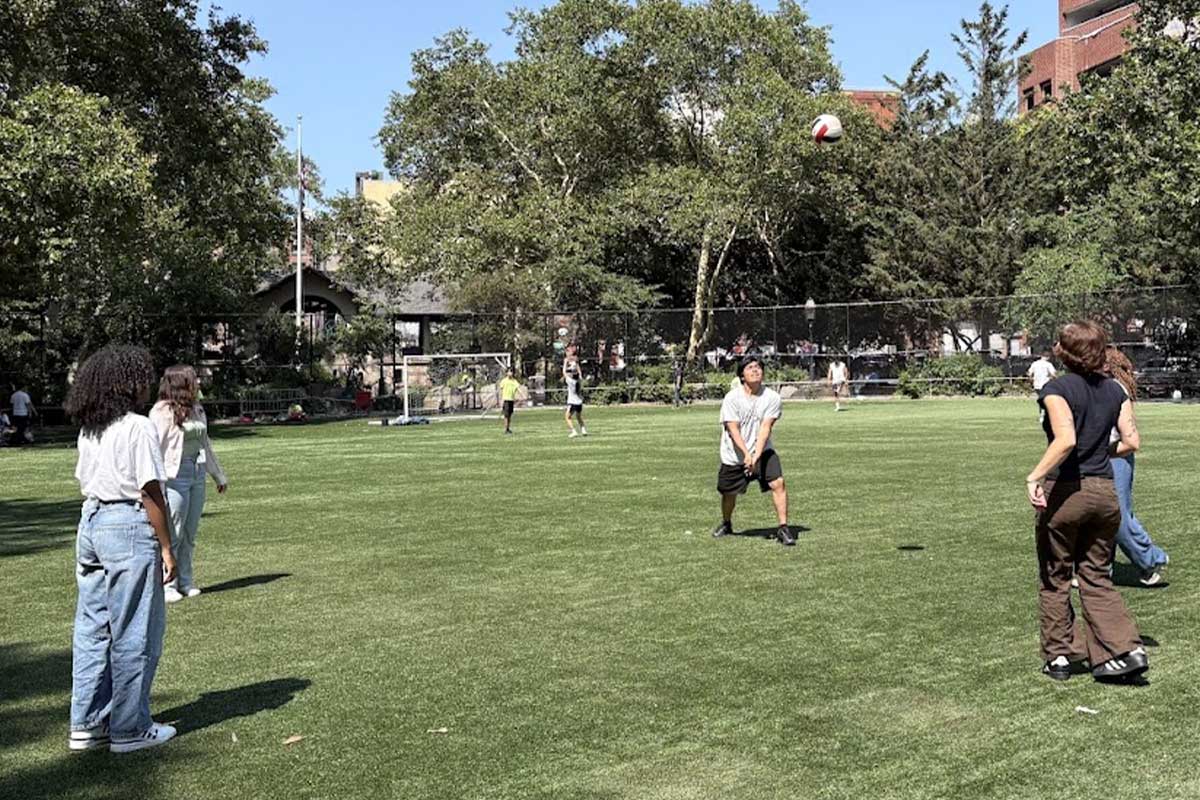
A third space is an unstructured area that isn’t one’s home, workplace or school. They offer space for people to relax and make connections. Some examples of third spaces include cafes, libraries, and parks, and with this year’s NBA Championship Finals and World Cup, watch parties became a popular third space option.
Third Spaces and LGBTQ+ Youth
While third spaces should be inclusive, welcoming spaces for people with shared identities to come together, third spaces look very different for youth, especially for LGBTQ+ and Black and Brown youth. As Val Weisler wrote for Hopelab:
“For LGBTQ+ young people—especially those in rural or hostile environments—public space is already precarious: only 9% report feeling ‘very safe’ expressing their identity in person, compared to 44% online, where distance offers protection.”
Additionally, only 17% of LGBTQ+ youth in rural areas considered their in-person environment as ‘very kind.’
Over Criminalization of Black and Brown Youth
So who are third spaces for? Or are they only selective to specific communities? There is a disparity between excused and unexcused behavior for certain demographic groups. Spaces defend their decisions for banning youth from entering because of disruptive behavior or potential theft. However, that only reinforces existing patterns of over-criminalization that Black, Brown, and Queer teens are already exposed to.
According to stop-and-frisk data released by the NYPD, young people aged 18-24 account for 35% of all stops from 2003-2024. Young people aged 15-17 make up 13% of stops and have a higher stop rate compared to adults aged 25-34. However, young people of color are targeted the most compared to other demographic groups. Black and Latinx 15–24-year-olds made up approximately 40% of all stop and frisk situations.
Third spaces are supposed to be an inclusive space for youth of all identities, but for young people of color, their safety is in question. Police interaction between young people of color creates more tension and can lead to the youth not having a welcoming space to relax. Young people are excluded from such spaces due to their intersectional backgrouds such as their race and age.
Park Access
Public parks are common areas open to any age group; however, that doesn’t mean they’re available for everyone. People who live in areas such as Northwestern Queens and Eastern Brooklyn, which includes the neighborhoods Jackson Heights and Bed-Stuy, are faced with fewer opportunities to access parks near them. Bensonhurst and lower Brooklyn highlight a strong need for urban green spaces, especially for children and pre-college students that have limited access to the spaces.
Were Third Spaces Ever Meant for Youth?
It is important that spaces for youth are designed with the youth in mind. Some researchers have found that third spaces were not designed for young people. The way spaces are constructed may encourage exclusion and increase adult surveillance and control over teens. And why is it that teens are left out of the design process? If the youth are not considered in regards to design and policy, this prevents teens from having the opportunity to share their opinions, feel a sense of belonging, and further discourages them from engaging in ways that impact their city.
Students shouldn’t have to rely on going to commercial centers as their third space, but lack of creative spaces and proximity to schools creates more convenience for teens. Malls used to be a go-to but now even malls are restrictive. The Target at Brooklyn Junction and Atlantic Terminal Mall implemented a new policy, where teenagers are only allowed to enter if they are with an adult.
“When being asked about third spaces, especially during high school I immediately thought of Atlantic Mall...Hanging out in Atlantic Mall once felt like a safe space, with a fun combination of window shopping and gossiping. It really did feel like an integral component of our everyday winding down post stressful school day was taken away from us.”
- Allyson Poyker, Policy and Legislation Summer Intern 2026
Conclusion
For some youth, third spaces serve as more than just a place for them to go to. They can be one of the only environments where youth feel welcome, as opposed to their home where they may not feel accepted, or schools where they may not feel safe to express themselves.
Third spaces provide a sense of community where young people seek structural support for mental health and well being.
To advocate for third spaces for the youth means to make sure the youth are at the forefront of every step in the way, whether that is gathering input or co-creating and designing spaces with them. The youth deserve third spaces where they aren’t denied access. They need a community where they have a sense of belonging and agency.
Third Space Resources:
- Find Your Third Space - Interactive map of third spaces across all boroughs
- Third Spaces In Chinatown (Restricted only for the summer)
- Summer in N.Y.C (Restricted only for the summer)
By Maimuna Fardous, Summer 2026, Education and Opportunity Intern
Don't miss the latest from the Office of the Public Advocate. Subscribe to the Advocate Bulletin newsletter.